Why Science Is More Than Just a School Subject
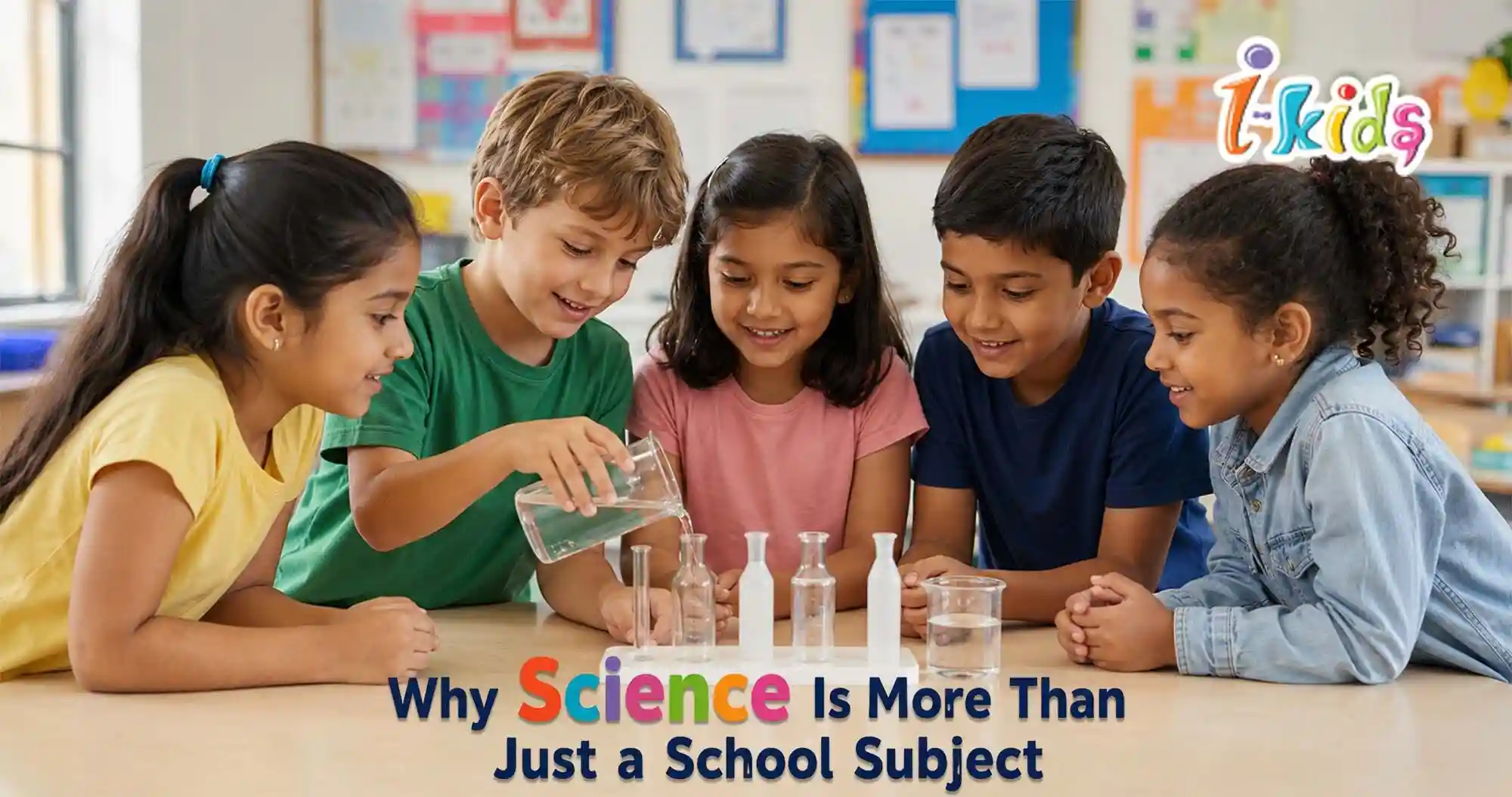
Science is often introduced to children as a technical subject filled with complex formulas and chemical reactions. Any scientific explanation given to a child includes unfamiliar scientific terms which would make no sense to the child. This makes children view science as a dull and boring subject, which exists only in classrooms and science labs. But in reality, science begins long before a child enters a classroom. Science is a vital guide to thinking and navigating the world, rather than just memorizing facts present in textbooks.
Children do not realize that science is actively present in their everyday life. It is in the alarm clock the kid wakes up to. It is in the toothpaste that the child uses every morning. It is in every food that they eat, the way they eat and why they eat. Science also lies in the child’s remote-control car and in their little toy fan. Science begins when they wake up and is present even while they’re sleeping. Even simple questions from children like “Why do onions make us cry?” or “Why did the piece of apple turn brown” are actually science in disguise. In short, science is everywhere and in everything. Once the child realizes this, science would immediately become their favorite thing to learn.
Teaching science to children in an easy way helps them develop curiosity, critical thinking and problem-solving skills from a very young age. Instead of simply memorizing answers for exams, they begin to understand concepts through exploration. Science also teaches children that it is okay to make mistakes. Every failed experiment gives a new opportunity to learn something new. This encourages children to think independently and become more confident.
Children need to learn science not just to score good marks in their exams, but to have a knowledge about the way of the world and how everything works. The moment a child starts asking “why?”, science has already begun. But what is more important is the way things are explained to them. Since scientific thinking has become more important now than ever, teaching science to children in a less-scary and relatable manner paves way in making them lifelong creative thinkers and inventors.
This is where fun educational science magazines like “Sci-kids” from i-kids magazine comes in. Magazines like this provide with interesting activities and science lessons, through which science actually becomes enjoyable to learn and engaging to children. When children begin to see science in everyday life, learning no longer feels like studying. Instead, it would only feel like answers to their curiosities.