How Puzzles Help With a Child’s Brain Development
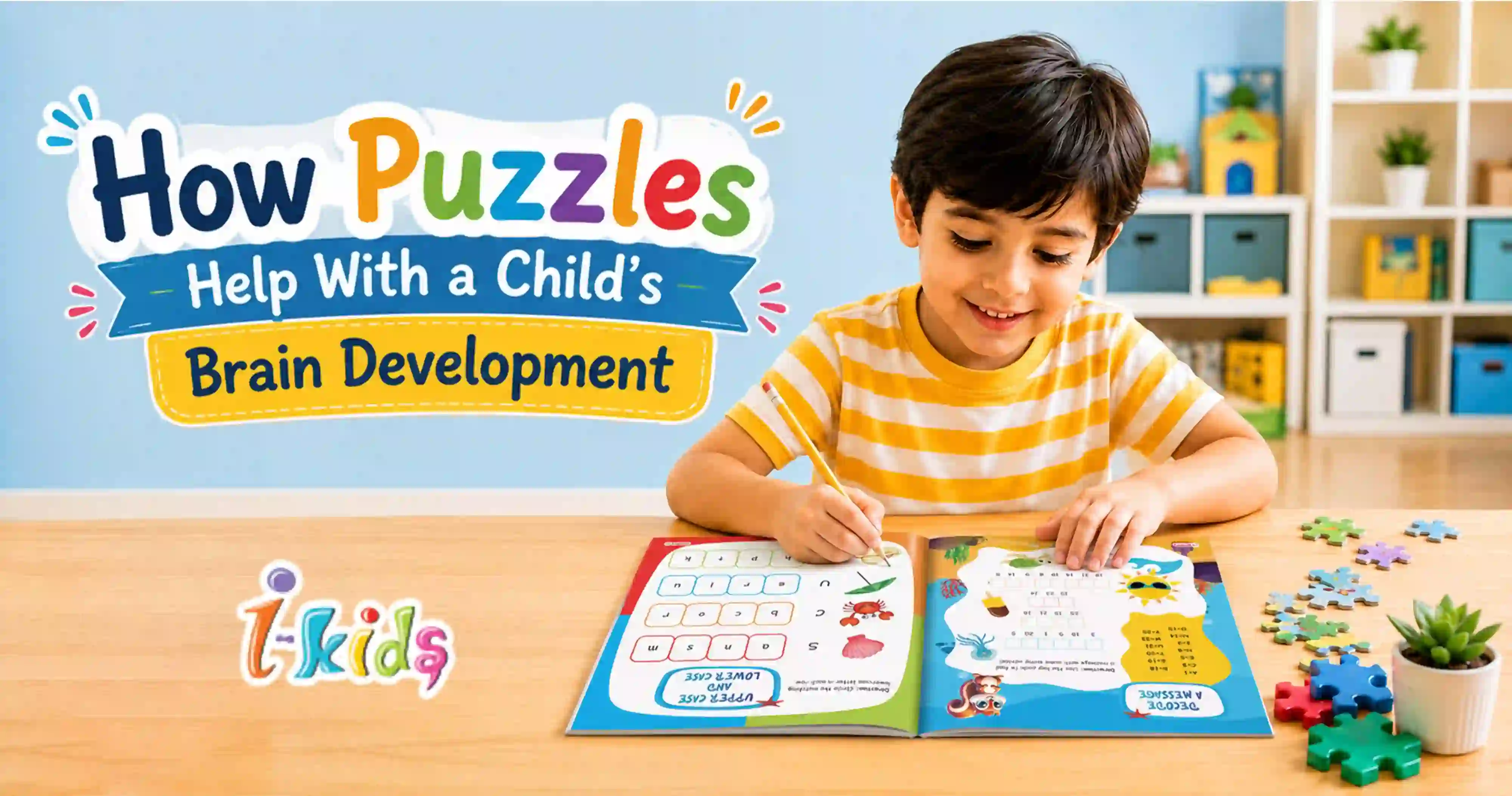
Modern children are growing up in a world filled with instant gratification. They seek fast-paced videos, addictive videos games and all such rapid stimulation, which trains the brain to expect immediate rewards. Puzzles on the other hand, tend to do the opposite. They teach patience.
A child cannot rush through a puzzle, a crossword or a maze. They must first observe the situation and then think about the possibilities to solve it. They will be able to do it through trial and error. A child who is handed a jigsaw puzzle first takes a good look at the model image that must be followed to solve that puzzle. Then, they pick up the pieces of the given puzzle and try to organize them based on colors or size. After that, they try to put the pieces together. If one piece does not fit, they do not give up, but instead, they try another piece that might fill the same gap. Observing and organizing skills can be seen in the child here.
Solving puzzles give children problem-solving skills at a very early age, which might actually result in a smoother life in their future. While solving a puzzle, a child might think that they are playing, while their brain thinks that they are training for survival. This way, a child is unintentionally learning how to approach a problem in a way they can actually understand.
Furthermore, what makes puzzles more powerful is the fact that it makes the child overcome uncertainty. Unlike a video game, which tells a child what comes next, a puzzle offers no hints. The child must tolerate not knowing the answer and yet keep going anyway. This tiny endurance of staying with a problem until it is solved, is one of the most valuable habits a child can develop. Another thing that a child learns through puzzles is how to self-correct without any outside help. This trains children to evaluate their own choices, adjust and learn from their own mistakes without the fear of judgement.
This is why, puzzle-based activities on kids’ magazine like i-kids magazine, look like entertainment on the surface level, while they quietly teach problem-solving skills, patience and focus. What looks like a “play” is actually a deep learning in disguise.